


关于春节的起源和习俗,要怎么讲给孩子听?附英文版
关于春节的起源和习俗,要怎么讲给孩子听?附英文版
自从孩子会说话,就变成了“十万个为什么”,老母亲肚里要是没点存货,一不留神就招架不住了!
马上就要过年啦!为什么要过年?压岁钱是什么?为什么要贴春联……你想好怎么回答了吗?
春节起源
农历新年,也称为春节,是中国最重要的节日,它的历史可以追溯到3500年前,人们在每年的开始或结束时举行祭祀仪式,以纪念神灵和祖先。经过漫长的历史沿革,从民国时期开始,春节正式被定在农历正月初一这一天。
像其他传统节日一样,关于春节也有很多神话故事,其中流传最广的故事要数年兽的传说啦!年兽是一头凶猛的怪兽,它总是在新年的时候出现,吃掉很多牲畜、农作物,甚至还会吃人!让人闻风丧胆。
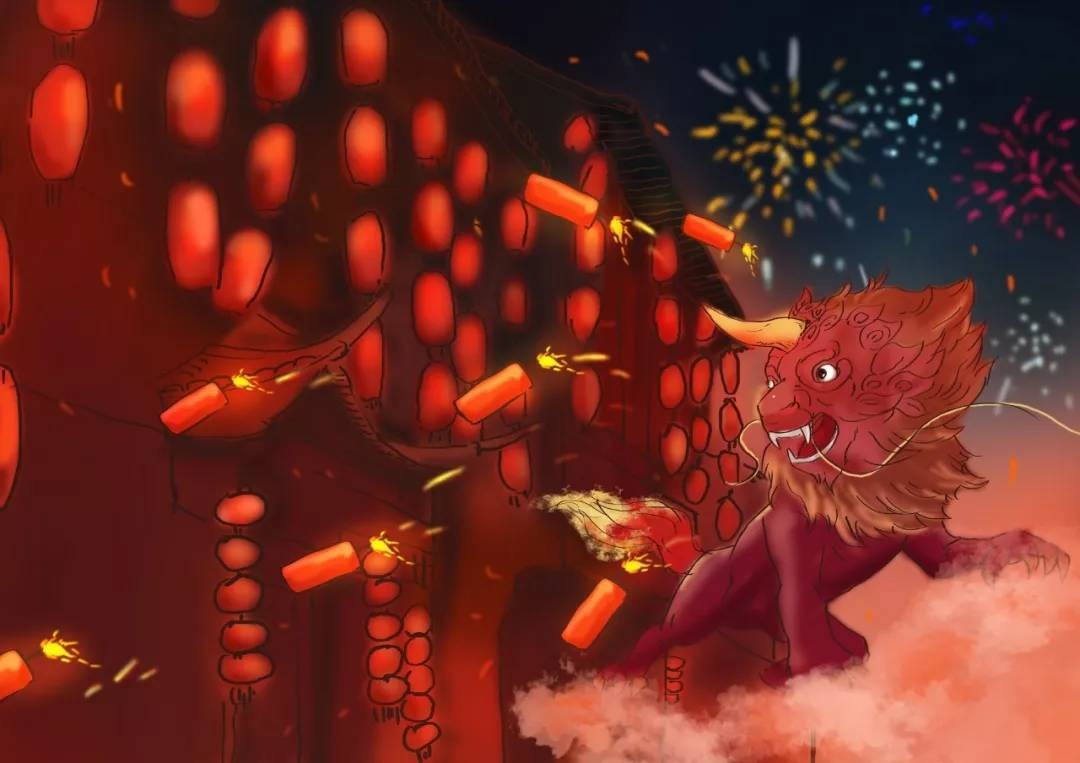
据说一个聪明的老人,发现年兽害怕巨大的声响和红色的东西,后来人们就在年兽快来的时候放鞭炮,在门窗上挂红色的灯笼、贴红色的对联来吓跑年兽。慢慢的,年兽就不敢再来作乱了。
我们可以用简单的英文来给孩子介绍年:
Chinese New Year, or the Spring Festival, is the most important and longest of all Chinese festivals.
The history of the Chinese New Year festival can be traced(追踪) back to about 3,500 years ago.
People held sacrificial ceremonies(祭祀仪式) in honor of(向…表示敬意) gods and ancestors(祖先) at the beginning or the end of each year.
Like all traditional festivals in China, Chinese New Year is steeped(充满) with stories and myths(神话). One of the most popular is about the mythical beast(神兽) Nian , who ate livestock(牲畜), crops, and even people on the eve of a new year.
It's said that a wise old man figured out that Nian was scared of loud noises and the color red. So people set off firecrackers(鞭炮),put red lanterns(灯笼) and red couplets(对联) on their windows and doors to stop Nian from coming inside. Crackling bamboo (later replaced by firecrackers) was lit to scare Nian away.
春节习俗
作为中国人最最重视的节日,人们在春节期间有着非常丰富的传统活动。由于幅员广阔、民族众多,不同地区风俗也有所不同,但大部分地区都有下面这些春节习俗。
打扫房屋、装饰房屋、购物
首先是打扫、装饰房屋以及购物。
很多人提前十几天就开始春节大扫除,不仅屋里屋外要扫除一遍,连所有的窗帘布艺都要换洗一新!人们通过彻底的打扫代表了告别旧年,迎接新年的愿望。
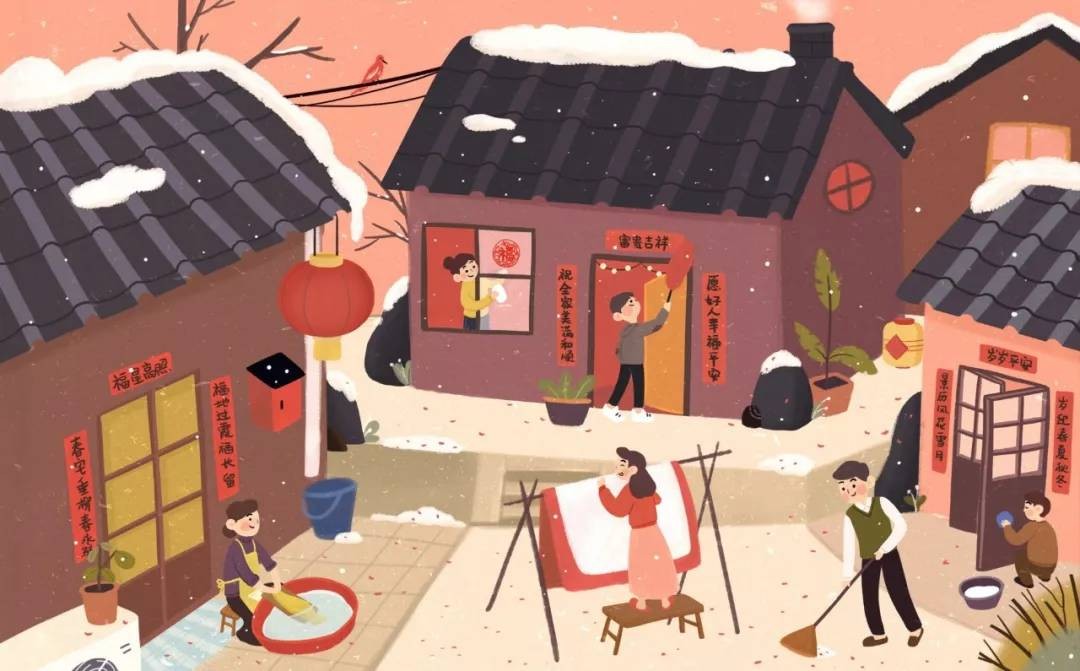
然后在打扫一新的房屋里外挂上灯笼、贴上春联、年画等等,一派喜气洋洋的气氛就出来了!这些传统的装饰物通常还有辟邪和祈愿的寓意。
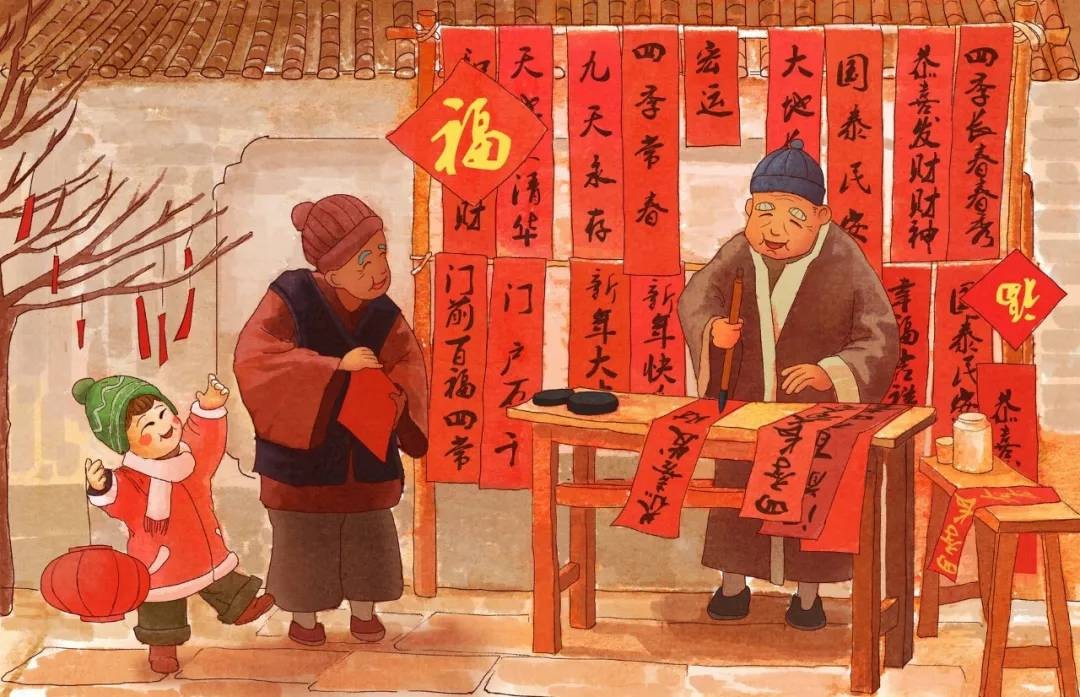
然后是购物。春节一直以来都是消费旺季,即使是平时非常节俭的人,到了春节也会慷慨一把,购买大量的新年食品、装饰品以及衣服等等,连小朋友都会唱“新年到,新年到,穿新衣,戴新帽”……
接下来给大家一些相应的英文参考:
House-Cleaning
People carry out a thorough ‘winter-cleaning’ of their houses.This is called "sweeping away the dust", and represents(代表) a wish to put away old things, bid farewell(告别)to the old year, and welcome in the New Year.
Putting Up New Year Decorations
Houses are decorated(装饰) with red lanterns(灯笼), red couplets(对联), Paper-cut(剪纸), and New Year’s paintings(年画). Putting up those decorations are thought to keep evil (邪恶)away and pray(祈祷) for health and peace.
New Year Shopping
Chinese New Year’s is a boom(激增,繁荣) time for shopping. People buy New Year’s food and snacks(零食,点心), New Year’s decorations, and New Year’s clothes.
享受团圆饭
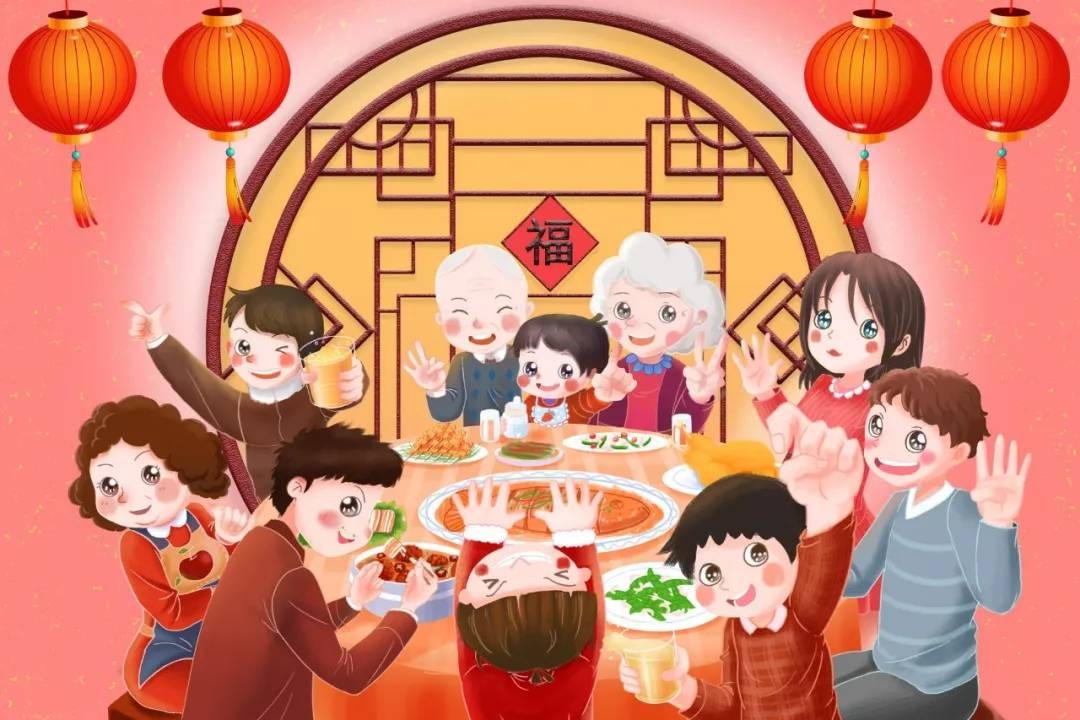
过年意味着全家人一起团团圆圆庆祝欢乐的节日。除夕这天,不管离家多远,人们都要长途跋涉,赶回家吃团圆饭。一年一度的“人口大迁徙”就由此而来。
除夕晚上,人们常常几世同堂围坐在餐桌旁,一起享受美食和团圆的时光。出现在除夕餐桌上的食物通常有鱼(寓意年年有余)、饺子(寓意更岁交子,团圆福禄)、年糕(谐音年年高升)等等,都包含了对未来的美好期望。
英文参考:
Enjoying a Reunion(团聚) Dinner
The New Year's Eve Feast (盛宴)is a "must-do" dinner . People try very hard to make this family event, often traveling long distances. This is the main reason for the huge travel stress throughout China.
Big families including several generations
(一代人) sit at round tables and enjoy the food and time together.
Dishes with lucky meanings must be included in the dinner such as fish, dumplings, and niangao (sticky rice cake).
看春晚
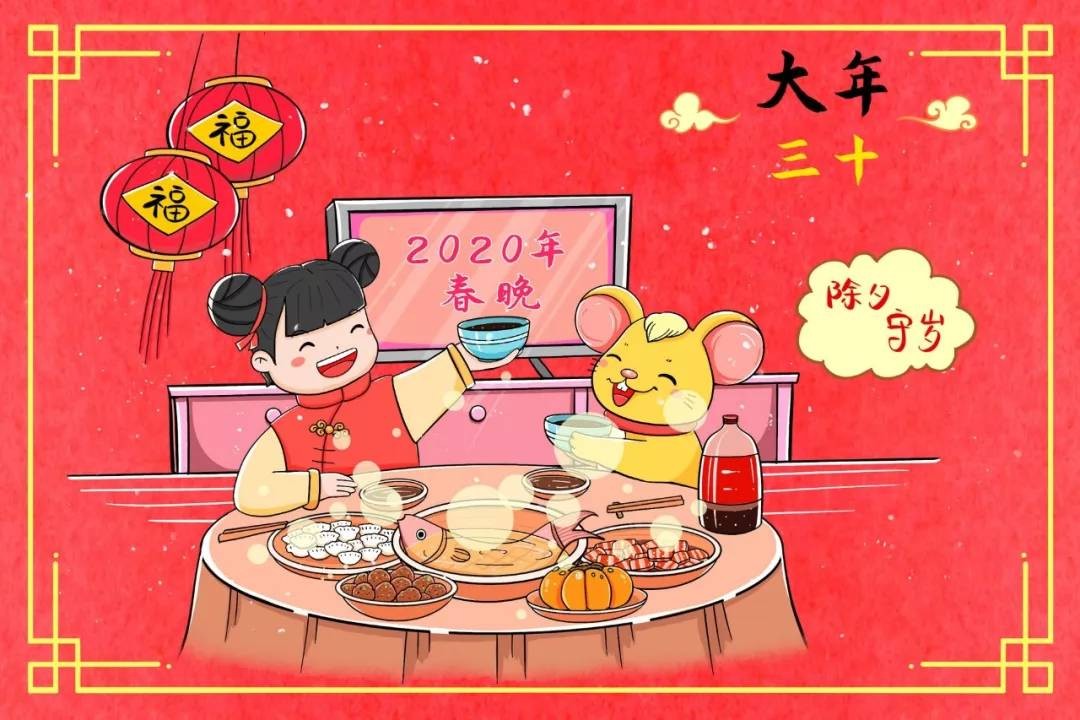
除夕晚上还有一项重大的活动,是全家一起观看央视新年晚会。晚会从晚上8点开始,一直持续到午夜,汇聚了包括传统、民俗和流行在内的许多精彩节目,是非常盛大的一场表演。
临近零点时,全国人民跟着晚会主持人一起倒计时,迎接新年第一天的到来。
英文参考:
Watching CCTV's New Year Gala
(联欢会)
It's become customary(习惯) for many families to watch the CCTV New Year Gala while having their dinner.
The Gala starts at 8 pm and ends when the Chinese New Year arrives at midnight.
It features(以……为特征) traditional(传统的), folk(民俗的), and pop(流行的) performances from China's best singers, dancers, and acrobats(杂技演员).
燃放烟花爆竹
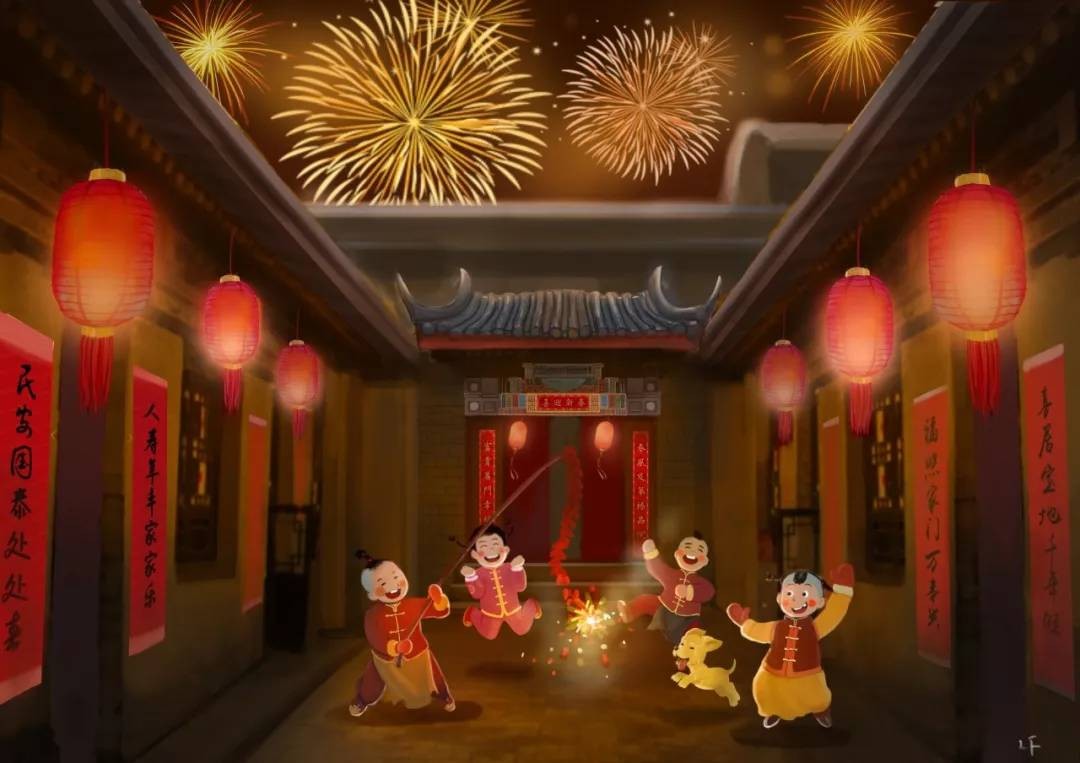
以前没有禁放烟花爆竹时,当零点的钟声响起家家户户都会燃放烟花爆竹,方圆几里劈里啪啦的响声此起彼伏,人们看不到彼此,却用鞭炮的遥相呼应共同庆祝这激动人心的时刻。
人们相信鞭炮声越响,来年的生意和收成就会越好。
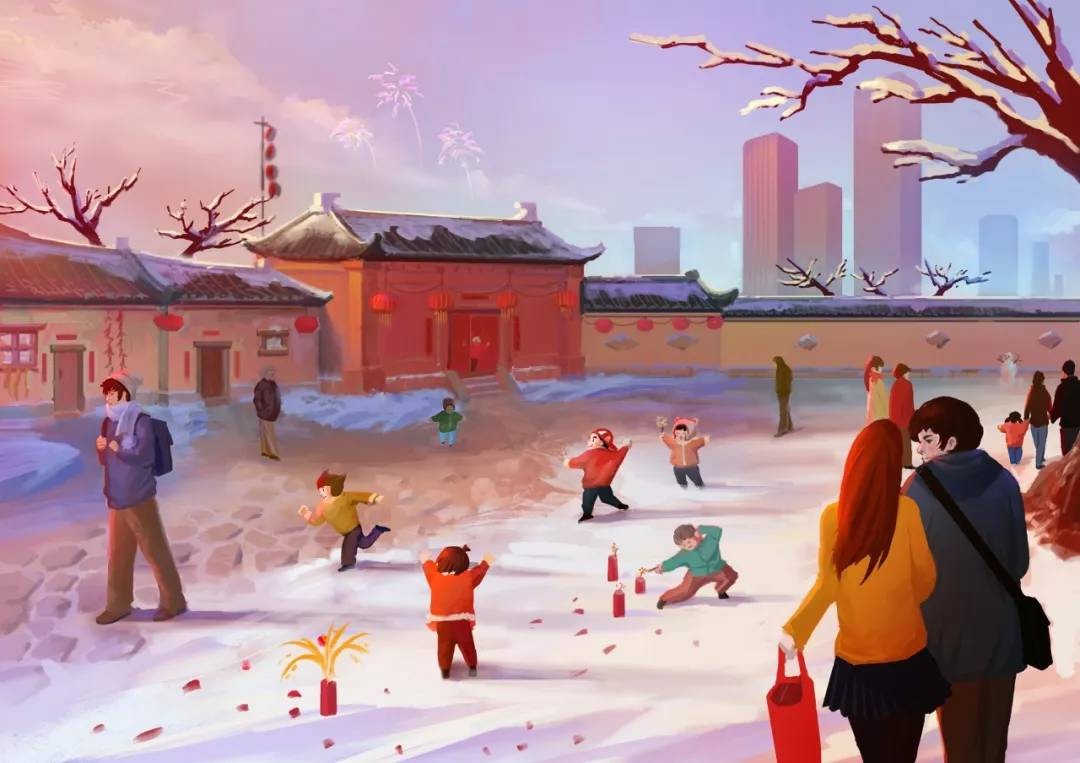
英文参考:
Setting Off Firecrackers and Fireworks
The moment New Year arrives there is a cacophony (嘈杂声)of fireworks and firecrackers all around. Families stay up for this joyful moment.
It’s believed that the louder the firecrackers, the better and luckier it will be for business and farming in the coming year.
发压岁钱
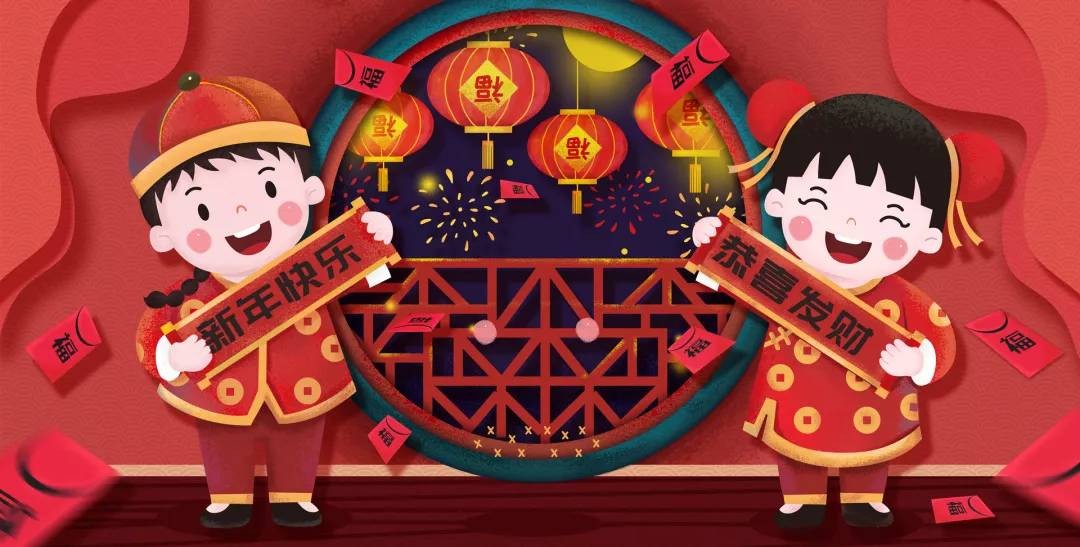
接下来这个习俗,可是我们的孩子最喜欢的啦!没错,就是发压岁钱!孩子们都会在春节得到长辈(父母祖父母七大姑八大姨舅舅叔叔)发给的压岁钱。
人们通常把压岁钱放在印有吉利话的红包里,祝愿孩子新年好运,健康成长。
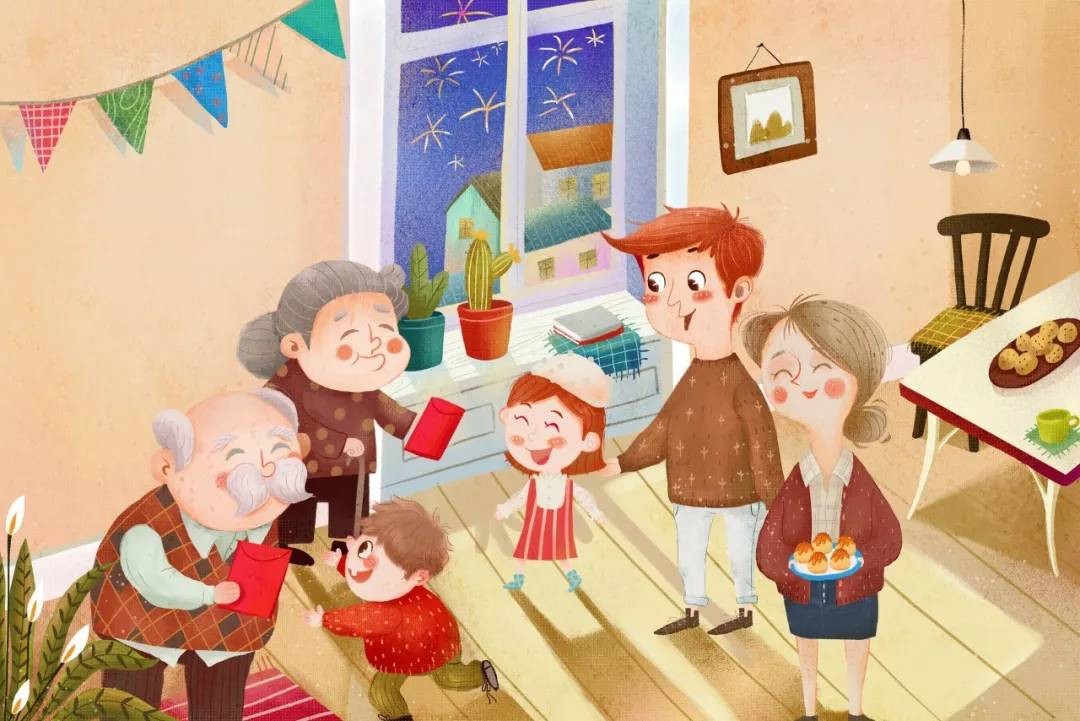
英文参考:
Giving Red Envelopes (Lucky Money) to Kids
Children usually get red envelopes from their parents 、 grandparents and other elders .
Money in red envelopes is believed to bring good luck, so it's called lucky money.
春节常用词汇
下面是春节最常用的英文词汇,点击长按即可保存到手机,供大家收藏备用哦!
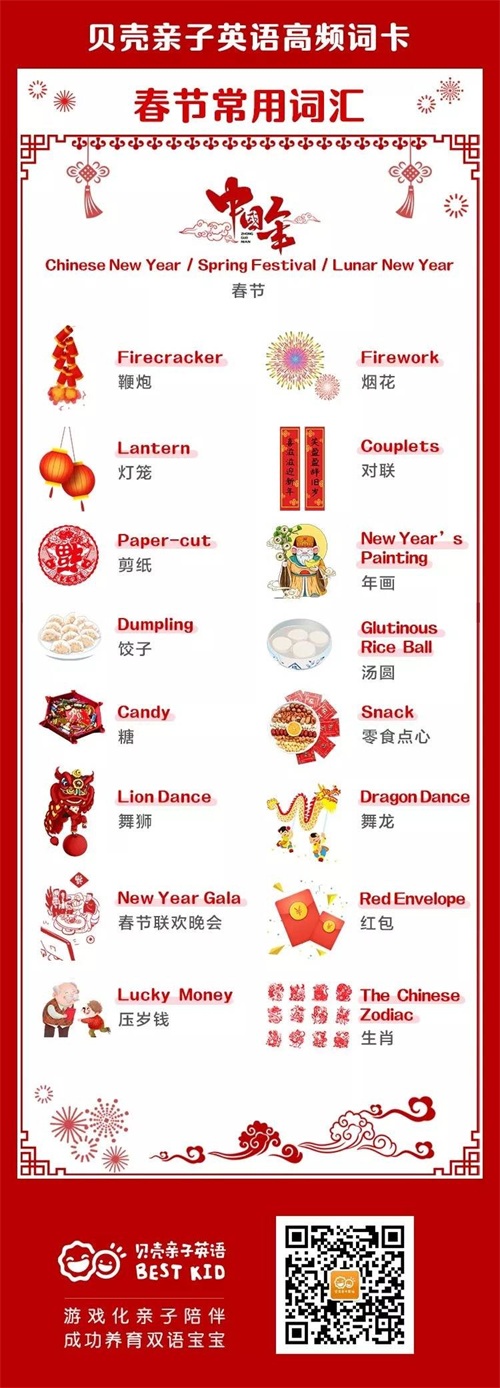
-
- 百鸟图(一百张)欣赏
-
2026-04-03 05:12:07
-
- 33岁胖妹为流量直播吃肥肉,吸粉无数后,容颜像60岁大妈现在怎样
-
2026-04-03 05:09:53
-

- 两百万买台二手事故车你愿意吗?这台宾利飞驰,你怎么看?
-
2026-04-03 05:07:38
-
- 京东重新定义品牌广告:“品效销一体化”质变
-
2026-04-03 05:05:24
-

- 女排世界排名,巴西登顶世界第1,土耳其降至第2,中国第6
-
2026-04-03 05:03:10
-
- 武汉地铁二号线为何乘坐体验感差,速慢人还挤,强行串联热门区域
-
2026-04-03 05:00:55
-
- 王思聪的爷爷:军人出身,活了101岁,百岁生日时王健林为他祝寿
-
2026-04-03 04:58:41
-
- “贡茶的战争”落幕 法院确认“贡茶”不为一家独有
-
2026-04-03 04:56:27
-

- 中美南海撞机:美机被大卸八块,我军获得大量宝贵文件
-
2026-04-02 06:17:28
-

- 11个超实用小众网站推荐,好网站不藏私
-
2026-04-02 06:15:13
-

- 从李连杰的《黄飞鸿之西域雄狮》,看到那些华工客死他乡魂飘海外
-
2026-04-02 06:12:59
-

- “全深圳乐凯撒,变粉了”
-
2026-04-02 06:10:45
-

- 国家金融监督管理总局“三定”方案公布
-
2026-04-02 06:08:30
-
- 肥城市龙山中学这场青年教师座谈会元气满满
-
2026-04-02 06:06:16
-
- 女死刑犯郭爽,行刑前得知小男友被判死缓后笑了:希望他好好活着
-
2026-04-02 06:04:02
-

- 谢芷蕙:16岁就把陈冠希、多位富豪玩弄股掌之间,心机与年龄无关
-
2026-04-02 06:01:47
-

- 宝马X7,2022款豪华SUV,价格、车型、参数,图片
-
2026-04-02 05:59:33
-
- 远古盾皮鱼,两性繁殖的“缔造者”它是第一个两性繁殖的鱼类
-
2026-04-02 05:57:18
-

- 原来如此!春晚从不对外售票,现场观众哪里来的?赵本山一语道破
-
2026-04-02 05:55:04
-

- 连云港至昆明:K492次快速列车,为啥成为两地人们出行的最爱
-
2026-04-02 05:52:50
 女生对你透露感情史是什么意思?该怎么应对
 高晓松新作《越过山丘》歌词解读
 4本都市YY种马文,萝莉控御姐控应有尽有,每一本后宫至少30起步
 《古惑仔》洪兴14位老大,你最多记得10个,后面4个你一定不记得
 呼兰大侠就是杨中山呼兰大侠案真实情况
 3本妖艳女主撩清冷禁欲男主文:《欢喜债》撩人小妖精x高冷禁欲男
 俞敏洪妻子照片(俞敏洪的婚史)
 收音机十大名牌(收音机十大名牌第一名是谁)
 特大淫秽直播平台被警方破获,每日观看人数64万,分店开遍东南亚
 作者 - 蟹总作品集,偏现实向,多糙汉